
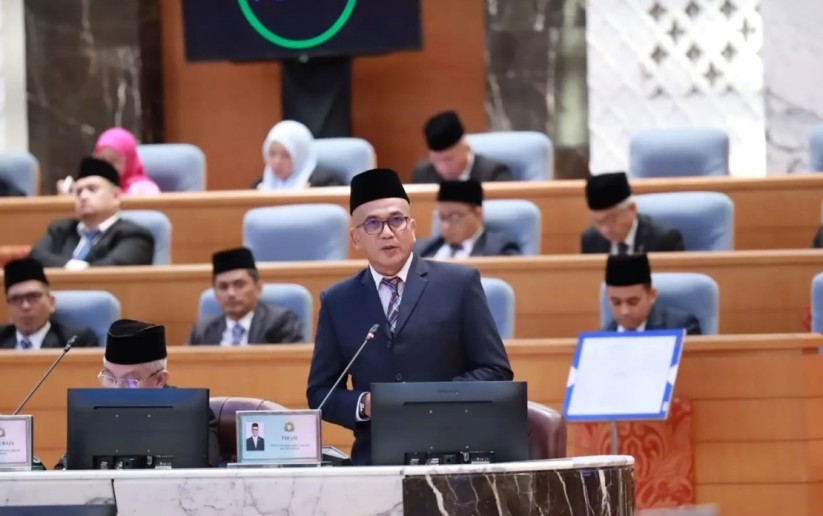
ISKANDAR PUTERI, Nov 24 (Bernama) -- The development of public healthcare facilities in Johor must be accelerated to keep pace with rapid housing development and population growth, ensuring residents have access to quality healthcare services.
Datuk Abdul Halim Suleiman (BN-Tiram) said the state government should prioritise the proposed Kota Masai Health Clinic in its discussions with the federal government to meet the healthcare needs of residents in the area.
He said although the construction and operation of government health clinics fell under the responsibility of the Health Ministry, the state government could assist with land matters, planning and inter-agency coordination.
"For senior citizens without transport, pregnant women, patients with diabetes and high blood pressure, as well as low-income families, long journeys and waiting times for treatment can be a significant burden.
"Healthcare facilities are not merely buildings. They are about ensuring people have easy, timely access to quality treatment," he said when debating the Johor 2027 Budget at the Johor State Legislative Assembly sitting here today.
Abdul Halim also urged the state government to provide an update on the proposed clinic, including the identification of a site, land matters and the project's application to the Health Ministry.
Meanwhile, Wong Bor Yang (PH-Senai) urged the state government to help expedite the application for an additional building at Hospital Temenggong Seri Maharaja Tun Ibrahim (HTSMTI) in Kulai, which currently has a capacity of only 93 beds.
He said Kulai's population had increased from 330,000 in 2020 to an estimated 380,000 in 2025, and was projected to reach 500,000 by 2035.
He said the hospital's bed occupancy rate reached 88.93 per cent between January and June this year, and had climbed to 96.8 per cent in August, the second highest in Johor after Hospital Sultan Ismail.
"The shortage of ward space and the inability to accommodate the high number of patients have resulted in patients being placed in unsuitable areas for monitoring or while waiting for ward beds, including near counter areas," he said.
Wong said the absence of an Intensive Care Unit (ICU) or High Dependency Unit (HDU) had also resulted in critically ill patients having to be referred to Hospital Sultanah Aminah in Johor Bahru.
He added that HTSMTI had only five ambulances and 14 ambulance drivers, and required at least two additional ambulances and three more drivers to meet daily operational needs.
-- BERNAMA